

Micronaut RequestStreamHandler to Lambda Java Runtime
Learn how to deploy a Micronaut function to AWS Lambda Java Runtime with an AWS Lambda RequestStreamHandler.
On this guide
In this section
In this guide, we will deploy a Micronaut serverless function to AWS Lambda using a RequestStreamHandler.
Getting Started
In this guide, we will create a Micronaut application written in Java.
What you will need
To complete this guide, you will need the following:
-
Some time on your hands
-
A decent text editor or IDE (e.g. IntelliJ IDEA)
-
JDK 21 or greater installed with
JAVA_HOMEconfigured appropriately
Solution
We recommend that you follow the instructions in the next sections and create the application step by step. However, you can go right to the completed example.
-
Download and unzip the source
Writing the Application
Create an application using the Micronaut Command Line Interface or with Micronaut Launch.
mn create-function-app example.micronaut.micronautguide \
    --features=aws-lambda \
    --build=maven \
--lang=java|
Note
|
If you don’t specify the --build argument, Gradle with the Kotlin DSL is used as the build tool. If you don’t specify the --lang argument, Java is used as the language.If you don’t specify the --test argument, JUnit is used for Java and Kotlin, and Spock is used for Groovy.
|
If you use Micronaut Launch, select "Serverless Function" as application type and add the aws-lambda feature.
The previous command creates a Micronaut application with the default package example.micronaut in a directory named micronautguide.
RequestStreamHandler
To use your own serialization, implement the RequestStreamHandler interface. With this interface, Lambda passes your handler an input stream and output stream. The handler reads bytes from the input stream, writes to the output stream, and returns void.
The application contains a class extending MicronautRequestStreamHandler.
Replace the generated FunctionRequestHandler.java with the following:
You will use MicronautRequestStreamHandler in combination with a class annotated with @FunctionBean, which implements one of the interfaces from the java.util.function package.
Tests
You can test that the handler behaves as expected, as shown in the following example:
Testing the Application
To run the tests:
./mvnw testLambda
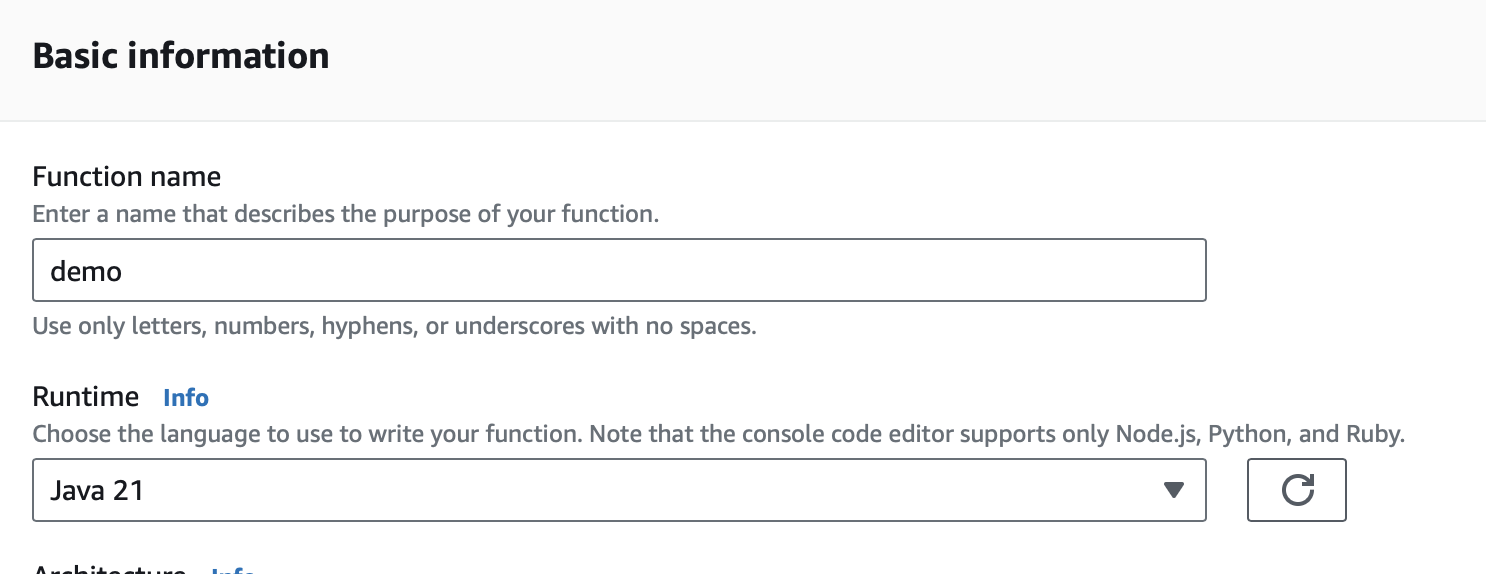
Create a Lambda function. As a runtime, select Java 21 or Java 17.
Upload Code
Create an executable jar including all dependencies:
./mvnw packageUpload it:
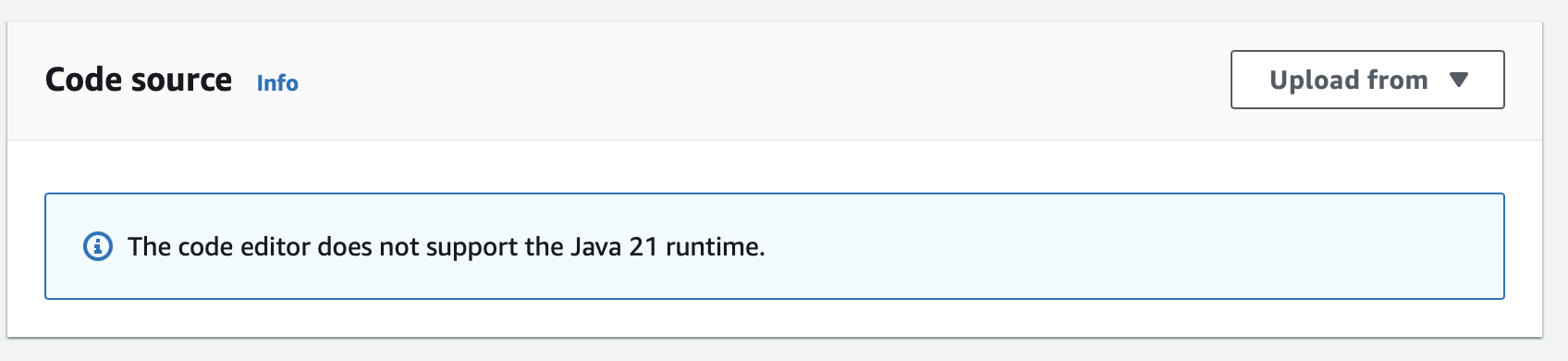
Handler
As Handler, set:
example.micronaut.FunctionRequestHandler

Test
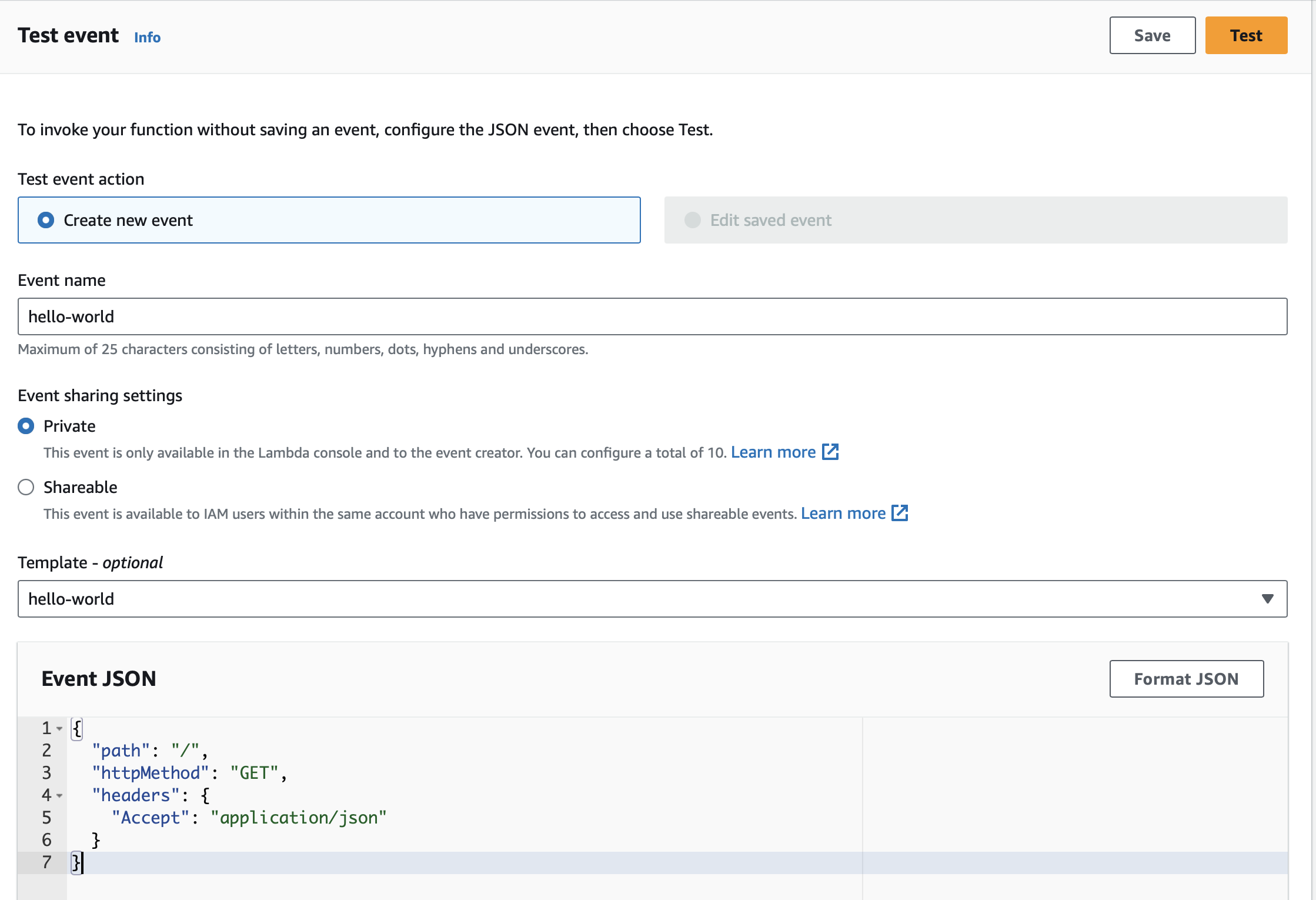
You can test it easily with a JSON Event:
{
  "path": "/",
  "httpMethod": "GET",
  "headers": {
    "Accept": "application/json"
  }
}
When working with Amazon API Gateway, it’s easy to use apigateway-aws-proxy as an Event Template to get started:
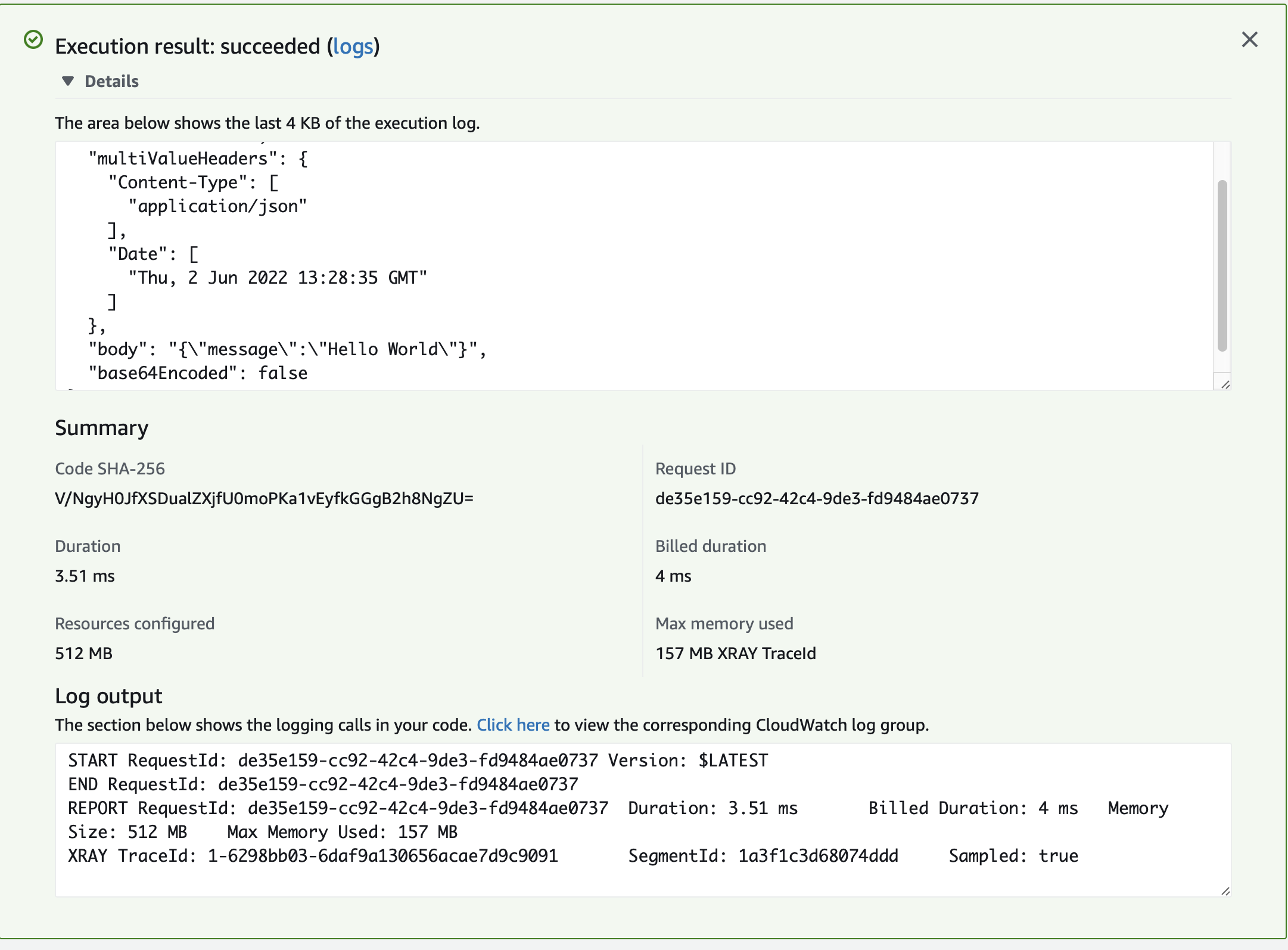
You should see a 200 response:
Next Steps
Explore more features with Micronaut Guides.
Read more about:
License
|
Note
|
All guides are released with an Apache License 2.0 for the code and a Creative Commons Attribution 4.0 license for the writing and media (images). |